ChevyParts
My Garage
My Account
Cart
OEM Chevrolet Classic Fan Shroud
Radiator Fan Shroud- Select Vehicle by Model
- Select Vehicle by VIN
Select Vehicle by Model
orMake
Model
Year
Select Vehicle by VIN
For the most accurate results, select vehicle by your VIN (Vehicle Identification Number).
1 Fan Shroud found
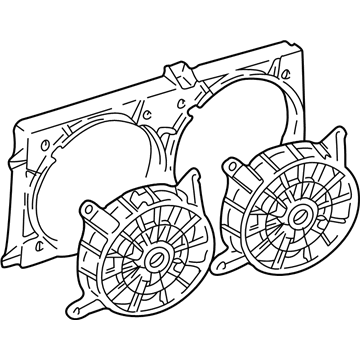
Chevrolet Classic Fan Shroud Part Number: 88957397
Chevrolet Classic Fan Shroud
Want to cut long-term maintenance and repair costs? Choose OEM Fan Shroud. Those parts deliver top durability you can trust. On our site, you'll find a huge catalog of genuine Chevrolet Classic parts. Prices are unbeatable, so you can keep more in your pocket. Every OEM Chevrolet Classic Fan Shroud includes a manufacturer's warranty. You can also get an easy return policy that keeps buying risk free. Fast delivery, get your car on the road quickly. It's simple to search, compare, and order. Stop guessing about quality or fit. Order today and save with parts that last.
Chevrolet Classic Fan Shroud Parts and Q&A
- Q:How to replace the fan shroud on Chevrolet Classic?A:The necessary replacement tools include hose clamp pliers (J38018-A) and halogen leak detector (J38800). Start by discarding the battery and tray before recovering a/c system fluid and draining cooling system liquid. The hose clamp pliers (J38018-A) enables you to relocate the Radiator inlet hose clamp after which you extract the Radiator inlet hose from the Radiator. The hose clamp pliers (J38018-A) need to be used to reposition the surge tank outlet/Radiator outlet hose clamp before removing the surge tank outlet/Radiator outlet hose from the surge tank. Use the hose clamps to move the Radiator vent hose and upper transaxle cooler line and condenser inlet fitting off the discharge hose before removing both the sealing washers. Disconnect the refrigerant pressure sensor electrical connector while using tape or caps to cover the open A/C Hose and removing the surge tank outlet/Radiator outlet hose bolt from the Intake Manifold. Ensure to disconnect the cooling fan power supply next to lift the car up and uninstall the bottom protective panel. The hose clamp pliers (J38018-A) help users move the surge tank outlet/Radiator outlet hose clamp to the Radiator while they remove the surge tank outlet/Radiator outlet hose that exists on the Radiator. Start by removing the lower transaxle cooler line together with the evaporator line from the condenser outlet and the lower Radiator support mounting panel. The vehicle assembly of Radiator and condenser and fan needs to be extracted first before moving on to the Fan Shroud. Use toolset 8018-a to unfasten the fan nuts from the fans. Afterward remove the fans along with their motors from their assembly. First remove the cooling Fan Motor bolts from the cooling fan motors and before taking out the cooling fan brackets and from the Fan Shroud. Place the Cooling Fan Bracket and onto the shroud before tightening them with Cooling Fan Bracket bolts to 10 nm (89 inch lbs.). Start by attaching cooling Fan Motor bolts to each cooling Fan Motor while tightening them to 6 nm (53 inch lbs.). After that, install fans to corresponding fan motors and secure them with fan nut tightening to 6 nm (53 inch lbs.). Hook up the cooling Fan Shroud to the Radiator then reinstall the Radiator together with fan and condenser for the vehicle followed by the lower Radiator support mounting panel with 10 nm (89 inch lbs.) bolts torque. Connect the evaporator line to the condenser outlet while using a new sealing washer and tighten the bolt to 25 nm (18 ft. Lbs.). Reinstall the lower transaxle cooler line by tightening its fitting to 30 nm (22 ft. Lbs.), after which attach the surge tank outlet/Radiator outlet hose to the Radiator while positioning the surge tank outlet/Radiator outlet hose clamp onto the Radiator. After installing the lower closeout panel users must lower the vehicle down and connect the cooling fan electrical connector. The surge tank outlet/Radiator outlet hose bolt must be reinstalled to the Intake Manifold while the discharge hose needs to lose its cap/tape followed by adding a new sealing washer. Once you connect the condenser inlet fitting to the discharge hose it must be tightened to 25 nm (18 ft. Lbs.) and then install the refrigerant pressure sensor electrical connector followed by the upper transaxle oil cooler line installation with the fitting tightened to 30 nm (22 ft. Lbs.). Finally, install the Radiator vent hose to the Radiator, attach the surge tank outlet/Radiator outlet hose to the surge tank, reposition the surge tank outlet/Radiator outlet hose clamp from the surge tank, install the Radiator inlet hose to the Radiator, reposition the Radiator inlet hose clamp , refill the cooling system, recharge the a/c system, leak test the fittings of the reinstalled components using the halogen leak detector (J38800), and complete the process by installing the battery tray and battery.
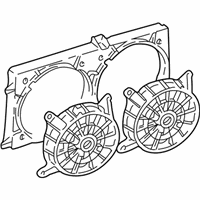
Related Chevrolet Classic Parts
 Chevrolet Classic A/C Condenser Fan
 Chevrolet Classic Coolant Pipe
 Chevrolet Classic Cooling Fan Assembly
 Chevrolet Classic Cooling Hose
 Chevrolet Classic Fan Motor
 Chevrolet Classic Fuel Pump Relay
 Chevrolet Classic Radiator
 Chevrolet Classic Radiator Cap
 Chevrolet Classic Radiator Hose
 Chevrolet Classic Thermostat
 Chevrolet Classic Thermostat Housing
 Chevrolet Classic Water Hose