ChevyParts
My Garage
My Account
Cart
OEM Saturn SL2 MAP Sensor
Manifold Air Pressure Sensor- Select Vehicle by Model
- Select Vehicle by VIN
Select Vehicle by Model
orMake
Model
Year
Select Vehicle by VIN
For the most accurate results, select vehicle by your VIN (Vehicle Identification Number).
2 MAP Sensors found
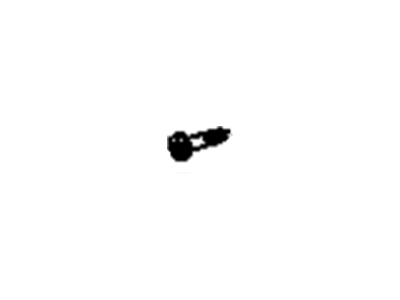
Saturn SL2 Map Sensor Part Number: 21024034
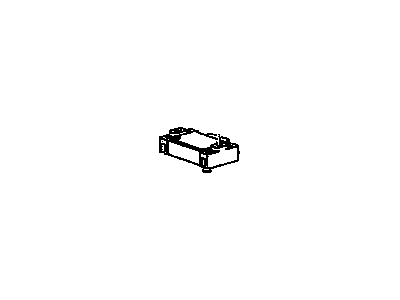
Saturn SL2 M.A.P. Sensor Part Number: 21020103
Saturn SL2 MAP Sensor
Want to cut long-term maintenance and repair costs? Choose OEM MAP Sensor. Those parts deliver top durability you can trust. On our site, you'll find a huge catalog of genuine Saturn SL2 parts. Prices are unbeatable, so you can keep more in your pocket. Every OEM Saturn SL2 MAP Sensor includes a manufacturer's warranty. You can also get an easy return policy that keeps buying risk free. Fast delivery, get your car on the road quickly. It's simple to search, compare, and order. Stop guessing about quality or fit. Order today and save with parts that last.
The Saturn SL2 MAP Sensor allows the engine computer to read intake manifold pressure accurately for smooth power and good fuel economy. The Saturn engineered the SL2 with a lightweight aluminum 1.9 liter dual overhead cam engine that punches out 124 horsepower and 122 lb-ft of torque so that the compact sedan feels like it's on the move without sipping gas. Saturn designers paired that engine with either a crisp five-speed manual or a refined four-speed automatic, which gave drivers flexibility of control. A fine-tuned suspension and front-wheel drive arrangement make the SL2 carve corners with confidence, and its relatively modest 2,400 pound curb weight makes for improved acceleration, braking, and mileage. High build quality, corrosion-resistant panels, and consideration for safety equipment are the reasons why many drivers still trust the Saturn for dependable daily duty. Supporting that performance, the SL2 MAP Sensor continuously measures absolute manifold pressure and then tells the ECU how much fuel and spark each cylinder needs, which keeps idle stable, reduces emissions, and prevents power loss at high rpm. Built to factory specifications, the Saturn SL2 MAP Sensor is built to withstand heat and vibration, is a quick installation, and restores factory throttle response when the original unit becomes aged. To switch it, disconnect the battery, unplug the old sensor on the intake manifold, unscrew it, clean the port, seat the new MAP Sensor unit, tighten screws, plug in the harness and battery, start the engine, and check for steady idle.
Related Saturn SL2 Parts
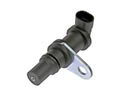 Saturn SL2 Crankshaft Position Sensor
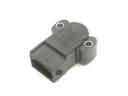 Saturn SL2 Throttle Position Sensor
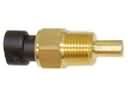 Saturn SL2 Coolant Temperature Sensor
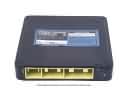 Saturn SL2 Engine Control Module
 Saturn SL2 Fuel Filler Hose
 Saturn SL2 Fuel Line Clamps
 Saturn SL2 Fuel Tank
 Saturn SL2 Fuel Tank Strap
 Saturn SL2 Igniter
 Saturn SL2 Intake Manifold Temperature Sensor
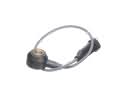 Saturn SL2 Knock Sensor
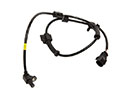 Saturn SL2 Speed Sensor