ChevyParts
My Garage
My Account
Cart
OEM Saturn SL2 Coolant Temperature Sensor
Coolant Water Temperature Sensor- Select Vehicle by Model
- Select Vehicle by VIN
Select Vehicle by Model
orMake
Model
Year
Select Vehicle by VIN
For the most accurate results, select vehicle by your VIN (Vehicle Identification Number).
2 Coolant Temperature Sensors found
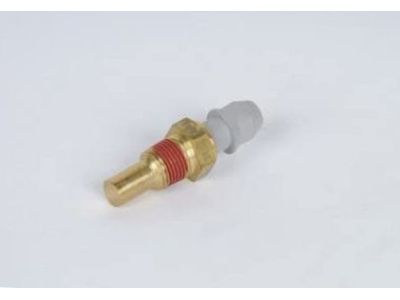
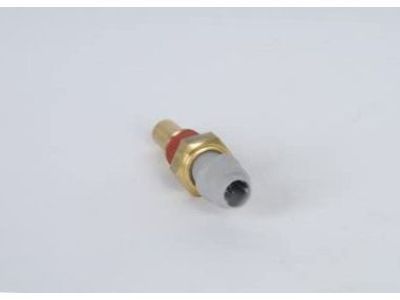
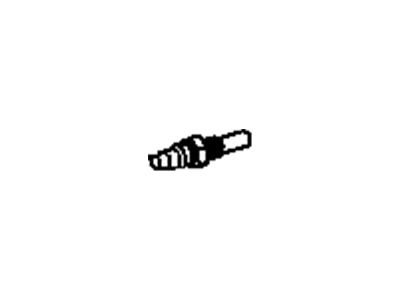
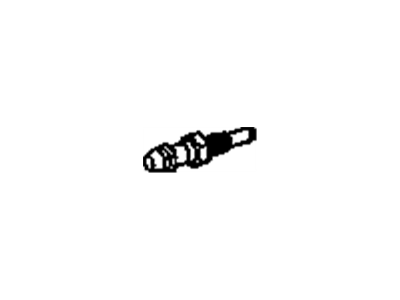
Saturn SL2 Temperature Sensor Part Number: 21020124
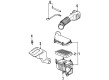
Saturn SL2 M.A.P. Sensor Part Number: 21025106
Saturn SL2 Coolant Temperature Sensor
Want to cut long-term maintenance and repair costs? Choose OEM Coolant Temperature Sensor. Those parts deliver top durability you can trust. On our site, you'll find a huge catalog of genuine Saturn SL2 parts. Prices are unbeatable, so you can keep more in your pocket. Every OEM Saturn SL2 Coolant Temperature Sensor includes a manufacturer's warranty. You can also get an easy return policy that keeps buying risk free. Fast delivery, get your car on the road quickly. It's simple to search, compare, and order. Stop guessing about quality or fit. Order today and save with parts that last.
The Saturn SL2 Coolant Temperature Sensor continuously measures the coolant heat to ensure that the engine computer controls the mix of fuel and the speed of the fans to achieve smooth and safe operation. Famous for its lightweight aluminum 1.9 liter DOHC engine, the Saturn SL2 provides 124 horsepower, speedy acceleration, and fair fuel consumption, and is helped by a choice of smooth five-speed manual or smooth four-speed automatic transmission, which enables the driver to customize the driving experience. The front-wheel drive design, equal power to weight, and robust Z-body platform provide the Saturn SL2 with sporty handling and reliable durability, and safety measures such as dual airbags and optional antilock brakes make the Saturn SL2 a better choice for the daily commute. There are comfortable seats, easy-to-read gauges, simple controls, and a large trunk, which make traveling in it easy, and the polymer body panels scoff off small dents so the paint lasts for years. Authentic components ensure that the car keeps going for decades, and the owners enjoy how easy it is to maintain the value of the compact sedan. The Saturn SL2 Coolant Temperature Sensor also increases efficiency as it feeds the ECU with accurate temperature data, which allows it to further adjust timing and idle with the goal of avoiding overheating and increasing mileage. The Coolant Temperature Sensor is a smart, inexpensive upgrade with a rugged thermistor that is long-lasting and corrosion-resistant. Installation, parking, and cooling down of the engine, disconnection of the battery, relieving of the pressure, unscrewing of the old unit in the area of the thermostat, threading of the new Coolant Temperature Sensor with sealant, reconnection of the plug, filling of the coolant, bleeding of the air, and checking of the readings.
Related Saturn SL2 Parts
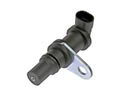 Saturn SL2 Crankshaft Position Sensor
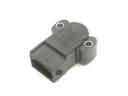 Saturn SL2 Throttle Position Sensor
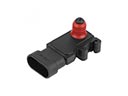 Saturn SL2 MAP Sensor
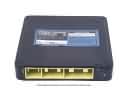 Saturn SL2 Engine Control Module
 Saturn SL2 Fuel Filler Hose
 Saturn SL2 Fuel Line Clamps
 Saturn SL2 Fuel Pump Tank Seal
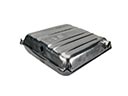 Saturn SL2 Fuel Tank
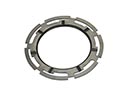 Saturn SL2 Fuel Tank Lock Ring
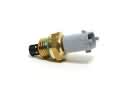 Saturn SL2 Intake Manifold Temperature Sensor
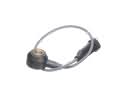 Saturn SL2 Knock Sensor
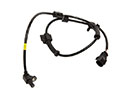 Saturn SL2 Speed Sensor