ChevyParts
My Garage
My Account
Cart
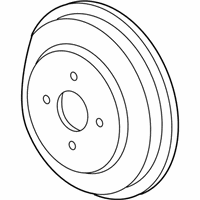
OEM Chevrolet HHR Brake Drum
- Select Vehicle by Model
- Select Vehicle by VIN
Select Vehicle by Model
orMake
Model
Year
Select Vehicle by VIN
For the most accurate results, select vehicle by your VIN (Vehicle Identification Number).
2 Brake Drums found
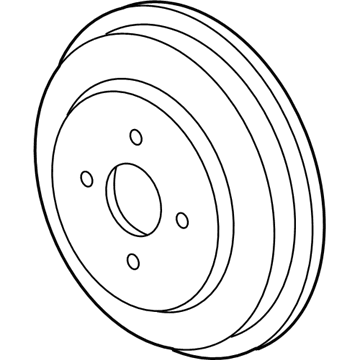
Chevrolet HHR Drum Part Number: 10388690
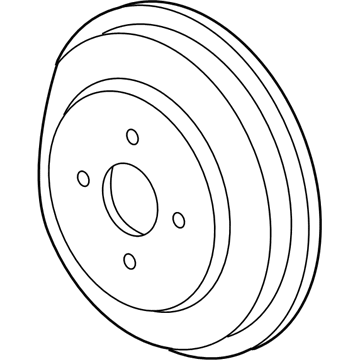
Chevrolet HHR Drum Part Number: 25806004
Chevrolet HHR Brake Drum
Want to cut long-term maintenance and repair costs? Choose OEM Brake Drum. Those parts deliver top durability you can trust. On our site, you'll find a huge catalog of genuine Chevrolet HHR parts. Prices are unbeatable, so you can keep more in your pocket. Every OEM Chevrolet HHR Brake Drum includes a manufacturer's warranty. You can also get an easy return policy that keeps buying risk free. Fast delivery, get your car on the road quickly. It's simple to search, compare, and order. Stop guessing about quality or fit. Order today and save with parts that last.
Chevrolet HHR brake drum is one of the essential and critical parts of the vehicle's braking system especially for the rear wheels to enhance the performance of the car. Brake Drum is made from special grade cast iron that ensures that the appliance is highly conductive to heat and is tough due to high stress usage. When the brakes are on, the brake shoes rubs on the interior periphery of the Brake Drum thus slowing down or even bringing the Chevrolet HHR vehicle to a complete halt. One mechanism is entirely vital, and all the above-mentioned models share this mechanism, which insists on efficient heat control and friction generation for better safety. The Chevrolet HHR manufactured from 2005 to 2011 is available with a variety of engines among which are the 2.0 L Ecotec turbo I4 and 2.4 L Ecotec I4; all these engines are complemented by the efficiency of the Brake Drum. The HHR model that the paper analyses has a five-passenger capacity and this serves to underscore the importance of a good braking hierarchy from the point of view of efficiency and safety. However, one must mention the Chevrolet HHR Brake Drum in the car market as it is noteworthy that high heat demanding the powerful construction plays a key role in automobile braking. This reliability does nothing in improving the driving experience but also makes people confident about the safety of the car part contributing to the Dependable Chevrolet HHR Brake Drum as a vital equipment of the model.
Chevrolet HHR Brake Drum Parts and Q&A
- Q:How to service and repair a brake drum on Chevrolet HHR?A:In order to service and repair the brake drum, one would require the following tools: Rotor/Drum Flange Resurfacing Kit (J 41013) and Hub Cleaning Kit (J 42450-A). Brake drums do not need refinished unless there is high corrosion, pitting, cracks, heat spots, blue discoloration, exceeding the maximum specification in terms of scoring, as well as exceeding the maximum specification in terms of radial runout. Check the brake drum in this condition and measuring its diameter with the tire and wheel assemblies off. If resurfacing is required, apply the Rotor/Drum Flange Resurfacing Kit (J41013) to clean up any corrosion off the brake drum flange, then attach your brake drum to the brake lathe as per the instructions from the maker, with all vibration dampening attachments being secure. With the lathe running, approach the cutting tool to the brake drum friction surface and witness mark; Moreover if the drum is adequately mounted, then it extends three-quarters or more around the surface. Refinish the drum according to the manufacturer's instructions of the lathe, checking diameter after every cut. In case the drum increases beyond the maximum allowable diameter after refinishing, it can be replaced. In order to produce a non-directional finish, introduce the suggested speed setting alongside 120 grit aluminum oxide sandpaper in case you are supplied with a non-directional finishing tool or 150 grit aluminum oxide sandpaper along with a sanding block in the event you are not, respectively. Once you apply the finish, clean the friction surfaces with denatured alcohol or a similar brake cleaner. Finally, extract the brake drum from the lathe and, when needed, clean the wheel bearing flange of any corrosion with the help of the Hub Cleaning Kit (J 42450-A) for reduced lateral runout and brake system pulsation.
- Q:How to replace the brake drum on Chevrolet HHR?A:To replace the Brake Drum, first, make sure that the park brake is fully released, then lift the vehicle and support it. Take off the tire and wheel assembly, and then the Brake Drum. If the Brake Drum is to be refitted, so that any rust or corrosion is removed from the hub/flange mating face on the Brake Drum, and if required, carefully remove any corrosion from the periphery of the drum braking face to facilitate its fitting. The flange of the wheel hub is your next task which has to be cleaned using the (J 42450-A). The protective coating from the drum's friction surface must be removed if installing a new Brake Drum using a denatured alcohol or an equivalent approved brake cleaner and a clean shop towel. Adjust the drum brakes, put then the Brake Drum and tire and wheel assembly. Finally, hit the brakes about three times to seat and center brake shoes inside the drum prior to lowering vehicle.
Related Chevrolet HHR Parts
 Chevrolet HHR Wheel Bearing
 Chevrolet HHR Backing Plate
 Chevrolet HHR Brake Caliper Bracket
 Chevrolet HHR Brake Caliper Repair Kit
 Chevrolet HHR Brake Dust Shields
 Chevrolet HHR Brake Line
 Chevrolet HHR Brake Pads
 Chevrolet HHR Brake Rotor
 Chevrolet HHR Brake Shoe Set
 Chevrolet HHR Hydraulic Hose
 Chevrolet HHR Wheel Cylinder
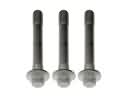 Chevrolet HHR Wheel Hub Bolt