ChevyParts
My Garage
My Account
Cart
OEM Chevrolet Tracker Flywheel
Clutch Flywheel- Select Vehicle by Model
- Select Vehicle by VIN
Select Vehicle by Model
orMake
Model
Year
Select Vehicle by VIN
For the most accurate results, select vehicle by your VIN (Vehicle Identification Number).
5 Flywheels found
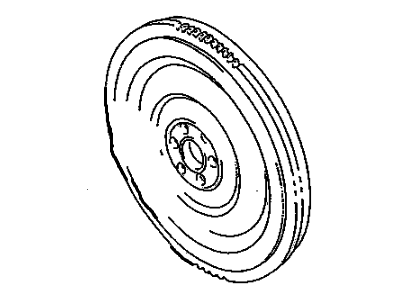
Chevrolet Tracker Flywheel Part Number: 96057940
$62.78 MSRP: $421.29You Save: $358.51 (86%)Ships in 1-2 Business Days
Chevrolet Tracker Flywheel Part Number: 91174411
Chevrolet Tracker Drive Plate Part Number: 91176197
Chevrolet Tracker Drive Plate Part Number: 91176995
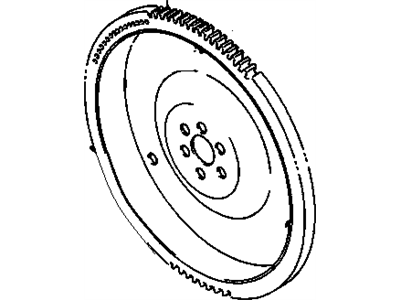
Chevrolet Tracker Drive Plate Part Number: 96058097
Chevrolet Tracker Flywheel
Want to cut long-term maintenance and repair costs? Choose OEM Flywheel. Those parts deliver top durability you can trust. On our site, you'll find a huge catalog of genuine Chevrolet Tracker parts. Prices are unbeatable, so you can keep more in your pocket. Every OEM Chevrolet Tracker Flywheel includes a manufacturer's warranty. You can also get an easy return policy that keeps buying risk free. Fast delivery, get your car on the road quickly. It's simple to search, compare, and order. Stop guessing about quality or fit. Order today and save with parts that last.
Chevrolet Tracker Flywheel Parts and Q&A
- Q:How to service and repair the Flywheel on Chevrolet Tracker?A:Service and repair operations for the Flywheel start with transmission removal after which the Pressure Plate and Clutch Disc must be removed from the Flywheel. You should remove the Crankshaft attaching bolts in sets of 6 before separating the Flywheel. Installation requires mounting the Flywheel onto the Crankshaft but technical staff should avoid using an abnormal quantity of sealant onflywheel retaining bolt threads as this may trigger a bolt seat overflow that ultimately causes the bolt to come loose during operation. The Flywheel retaining bolts must be tightened to 78 nm (58 ft. Lbs.) after applying gm p/n 12345493 or equivalent material on the threads. The Pressure Plate and Clutch Disc should be installed onto the Flywheel before placing the transmission in position.
- Q:How to replace the engine flywheel on Chevrolet Tracker?A:The first step for Flywheel engine replacement involves taking out both transmission components as well as clutch and Pressure Plate elements in vehicles with manual transmission. An inspection of the ring gear should be performed before replacing the Flywheel in case of damage or wear. The surface of the Clutch Disc needs to be checked on manual transmission vehicles before replacing the Flywheel in cases where the surface shows damage or severe wear. The runout measurement of the Flywheel face must be conducted using the j 8001 dial indicator set (J 8001) together with the j 26900-13 magnetic indicator base (J 26900-13). Replacement of the Flywheel becomes necessary if the runout stands above 0.2 mm (0.0078 inch). Use the j 35271 holder to lock the Flywheel in place before you remove the eight retaining bolts. Examine the clutch pilot bushing after removing the Flywheel from the Crankshaft and replace it if required. Use a suitable solvent to remove grease and dirt from all surfaces on the Flywheel. During installation position the Flywheel-to-engine marks correctly before fastening the Flywheel to the Crankshaft while using the proper amount of sealant to achieve correct assembly. Follow gm p/n 12345493 or its equivalent for thread treatment of the Flywheel retaining bolts before screwing them into the Crankshaft while using the j 35271 to maintain Flywheel stability. Use the j 35271 to lock the Flywheel before applying cross tightening of 70 nm (51 ft. Lbs.) to the 8 retaining bolts. Put the clutch and Pressure Plate with manual transmission vehicles along with reinstallation of the Transmission Assembly.
Related Chevrolet Tracker Parts
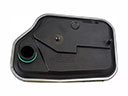 Chevrolet Tracker Automatic Transmission Filter
 Chevrolet Tracker Automatic Transmission Seal
 Chevrolet Tracker Clutch Disc
 Chevrolet Tracker Clutch Fork
 Chevrolet Tracker Clutch Hose
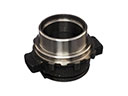 Chevrolet Tracker Clutch Release Bearing
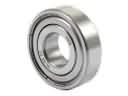 Chevrolet Tracker Pilot Bearing
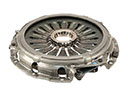 Chevrolet Tracker Pressure Plate
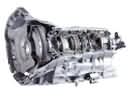 Chevrolet Tracker Transmission Assembly
 Chevrolet Tracker Transmission Drain Plug
 Chevrolet Tracker Transmission Gasket
 Chevrolet Tracker Transmission Pan