ChevyParts
My Garage
My Account
Cart
OEM Saturn Vue Clutch Master Cylinder
- Select Vehicle by Model
- Select Vehicle by VIN
Select Vehicle by Model
orMake
Model
Year
Select Vehicle by VIN
For the most accurate results, select vehicle by your VIN (Vehicle Identification Number).
1 Clutch Master Cylinder found
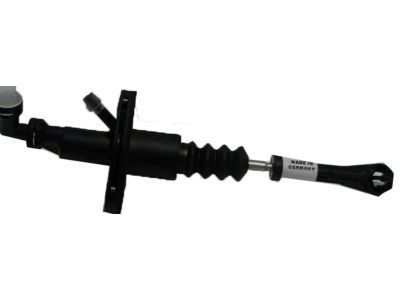
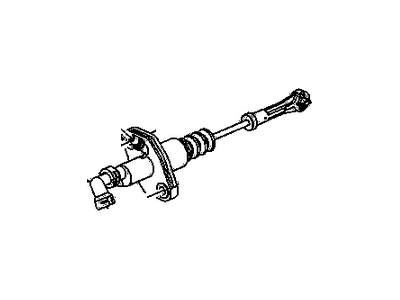
Saturn Vue Master Cylinder Part Number: 12577984
$68.81 MSRP: $109.25You Save: $40.44 (38%)Ships in 1-3 Business Days
Saturn Vue Clutch Master Cylinder
Want to cut long-term maintenance and repair costs? Choose OEM Clutch Master Cylinder. Those parts deliver top durability you can trust. On our site, you'll find a huge catalog of genuine Saturn Vue parts. Prices are unbeatable, so you can keep more in your pocket. Every OEM Saturn Vue Clutch Master Cylinder includes a manufacturer's warranty. You can also get an easy return policy that keeps buying risk free. Fast delivery, get your car on the road quickly. It's simple to search, compare, and order. Stop guessing about quality or fit. Order today and save with parts that last.
Saturn Vue Clutch Master Cylinder provides sharp shifting with the conversion of the force on the pedal to hydraulic pressure that rapidly divides the clutch and flywheel, providing the driver with smooth control. The Saturn Vue comes out as a compact SUV that is versatile and is constructed on the powerful GM Theta architecture that has made the car maintain low weight while at the same time the structure is rigid. Drivers like the agile 106.6-inch wheelbase that allows the Saturn Vue to wind through city traffic but still sit squarely on the back country roads, and like a high seating position that gives confidence. Four-cylinder powertrain efficiency is applied to stretch fuel costs, and a V6 is optional to provide extra torque on the fast highway merge, and the Getrag F23 manual or the 4T45-E automatic fits diverse driving styles. Long life and year-round capability were priorities in Saturn engineering as demonstrated by durable factory parts, 2006 exterior refresh, and reliable all-wheel drive options. A properly maintained Clutch Master Cylinder maintains the pedal firm, transfers fluid immediately to the slave cylinder, and protects internal seals against heat loss. The Clutch Master Cylinder in the Vue is a hardworking cylinder that engages roughly with every shift and thus should have leaks or air in it which should make it be serviced fast. To fit a new Saturn Vue Clutch Master Cylinder, disconnect the battery, relieve pressure, unbolt the old one from the pedal and firewall, bench bleed the new, bolt it, reconnect hoses, fill it, bleed the line, check for leaks, and road test.
Related Saturn Vue Parts
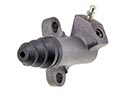 Saturn Vue Clutch Slave Cylinder
 Saturn Vue Automatic Transmission Shift Levers
 Saturn Vue Automatic Transmission Shifter
 Saturn Vue Clutch Disc
 Saturn Vue Clutch Hose
 Saturn Vue Clutch Hydraulic Lines
 Saturn Vue Clutch Master Repair Kit
 Saturn Vue Clutch Slave Repair Kit
 Saturn Vue Pressure Plate
 Saturn Vue Shift Cable
 Saturn Vue Transfer Case
 Saturn Vue Transmission Assembly