ChevyParts
My Garage
My Account
Cart
OEM Chevrolet Cruze Fuel Pressure Sensor
Fuel Tank Pressure Sensor- Select Vehicle by Model
- Select Vehicle by VIN
Select Vehicle by Model
orMake
Model
Year
Select Vehicle by VIN
For the most accurate results, select vehicle by your VIN (Vehicle Identification Number).
4 Fuel Pressure Sensors found
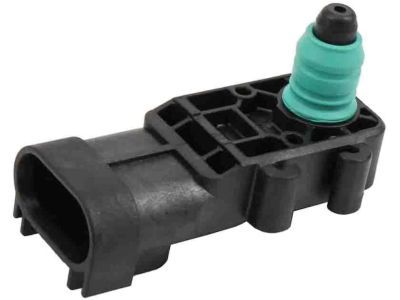
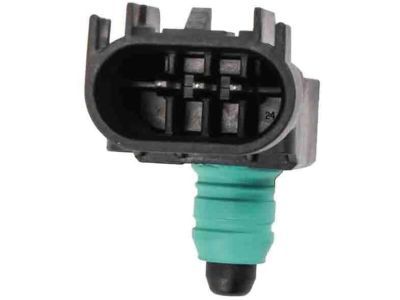
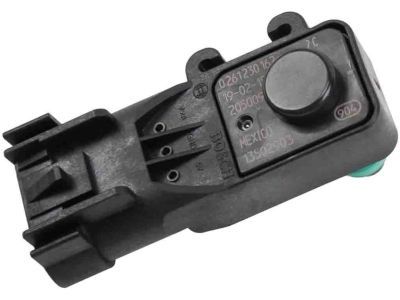
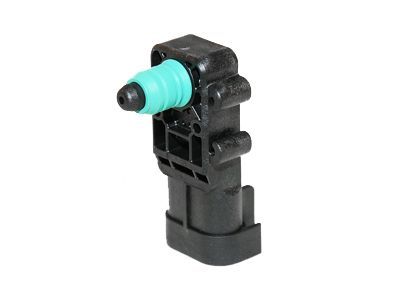
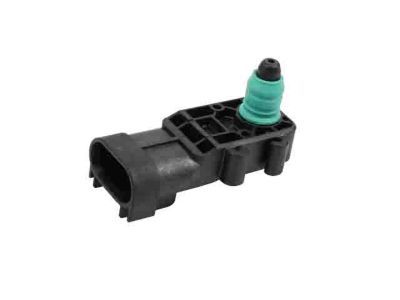
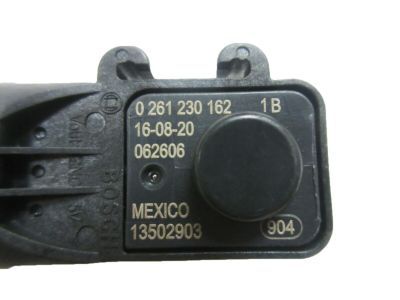

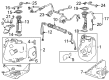
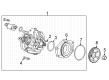
Chevrolet Cruze Pressure Sensor, Passenger Side Part Number: 13502903
$51.35 MSRP: $105.55You Save: $54.20 (52%)Ships in 1-2 Business Days
Chevrolet Cruze Pressure Sensor Part Number: 12686809
$161.68 MSRP: $309.68You Save: $148.00 (48%)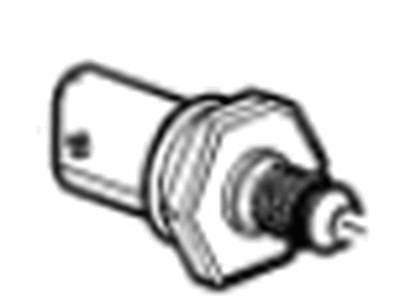
Chevrolet Cruze Pressure Sensor Part Number: 12705503
$35.89 MSRP: $67.40You Save: $31.51 (47%)Ships in 1-2 Business Days
Chevrolet Cruze Pressure Sensor Part Number: 55564171
Chevrolet Cruze Fuel Pressure Sensor
Want to cut long-term maintenance and repair costs? Choose OEM Fuel Pressure Sensor. Those parts deliver top durability you can trust. On our site, you'll find a huge catalog of genuine Chevrolet Cruze parts. Prices are unbeatable, so you can keep more in your pocket. Every OEM Chevrolet Cruze Fuel Pressure Sensor includes a manufacturer's warranty. You can also get an easy return policy that keeps buying risk free. Fast delivery, get your car on the road quickly. It's simple to search, compare, and order. Stop guessing about quality or fit. Order today and save with parts that last.
Chevrolet Cruze Fuel Pressure Sensor maintains the correct flow of fuel to ensure that the small sedan runs smoothly and with excellent mileage. The Chevrolet Cruze is credited with nimble handling and a comfortable ride that combines a turbocharged 1.4-liter engine with 153 horsepower and 177 lb-ft of torque that is channeled to the responsive six-speed automatic that helps the driver zoom in and out of traffic jams or cruise through the highway and sips fuel at a rate of 36 miles per gallon. Diesel customers also have even greater torque and an automatic nine-speed, which provide the Chevrolet Cruze with sure passing power and excellent economy on highways. The Chevrolet Cruze is a smart car that offers solid steering feel, spacious seating, advanced infotainment, and a reputation for reliability to families who do not want to spend out of their budget to get style. That performance is augmented by the Fuel Pressure Sensor, which is mounted on the rail and continuously broadcasts pressure information to the engine computer to allow instant adjustments to stabilize idle, sharpen throttle response, and ease diagnostics in case of problems. A faulty Fuel Pressure Sensor may cause hard start or slow acceleration, and therefore it is important to replace it before it fails. The Fuel Pressure Sensor is immediately flagged by the onboard computer when the readings are out of range, preventing damage that could be costly. Installation is easy, park safely, deflate the pressure, disconnect the battery, loosen the old unit, unbolt and remove the old unit, lubricate the new unit, seat and tighten the new sensor, reconnect the wiring and the battery, and cycle the key to verify the presence of leakages.
Related Chevrolet Cruze Parts
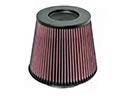 Chevrolet Cruze Air Filter
 Chevrolet Cruze Mass Air Flow Sensor
 Chevrolet Cruze Fuel Injector
 Chevrolet Cruze Fuel Pressure Regulator
 Chevrolet Cruze Air Filter Box
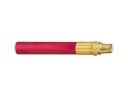 Chevrolet Cruze Air Hose
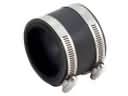 Chevrolet Cruze Air Intake Coupling
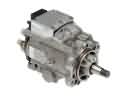 Chevrolet Cruze Fuel Injection Pump
 Chevrolet Cruze Fuel Injector O-Rings
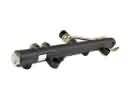 Chevrolet Cruze Fuel Rail
 Chevrolet Cruze Fuel Tank Strap
 Chevrolet Cruze Intake Manifold Temperature Sensor